Today, we consider osteophytes to be the body’s normal response to the physical stress to which that compound is exposed.
Their formation increases the surface area over which the force is transferred to the bone, thus reducing the pressure per unit area.
Osteophytes
Description
One of our patients, a physically very active 50-year-old man, gradually developed pain and limitation of movement in his right hip over the last few years. Finally, a few months ago, he did an X-ray, which showed advanced osteoarthritis of the hip, with the development of osteophytes. On his own initiative, he also did MR diagnostics, which showed the same osteophytes in detail, along with all the changes in the soft tissues. His first question was how can these bony growths be removed?
For a better understanding, bone protrusions or distortions, which we also call osteophytes, can be divided into three groups for this occasion. Each of them develops in response to the forces acting on that bone.
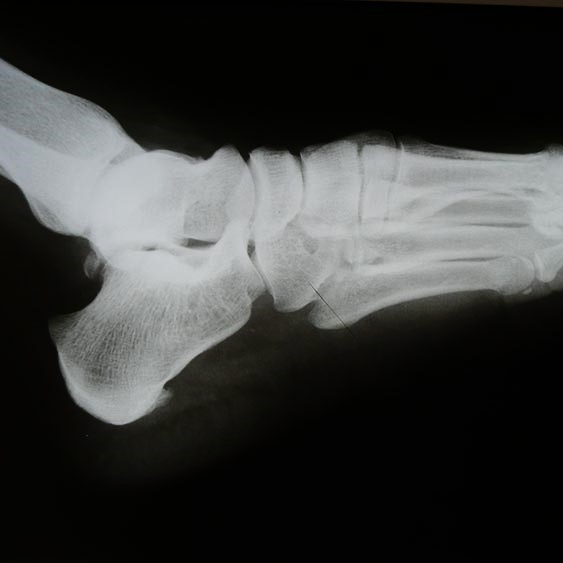
One is enthesophytes, and they appear on the grips of tendons or ligaments on the bone. The most famous among them is the heel thorn. Today, we consider them to be the body’s normal response to the physical stress to which that compound is exposed. Their formation increases the surface area over which the force is transferred to the bone, thus reducing the pressure per unit area.
Osteophytes within the arthrosis process can be divided into two groups. One is a change in the shape of the bone under the thinned cartilage. This change goes in the direction of increasing the surface of the joint and thus dispersing the forces during movement, and consequently reducing the stress on the injured parts of the joint.
Another is the formation of osteophytes in the so-called dysplastic arthrotic joint. Most often, such changes are present in the hip. Namely, the cup of the joint can be shallower or there is a change in the head of the joint. In such a situation, the shape of the joint allows more instability, which the body tries to reduce by developing protrusions on the bones that will reduce mobility, thus reducing instability and slowing down the degradation of soft structures. Attempts to surgically remove osteophytes in such situations in the past proved unsuccessful, rarely helping to reduce pain, more often increasing it.
Arthrosis is a complex process and varies from patient to patient. It is good to discuss and correctly interpret the findings of imaging diagnostics with a doctor and physiotherapist and make an individual treatment and prophylaxis plan.
RELATED CONTENTS
Premium
Plaćeno
Literally the entire medical profession and all patients, together with us, view knee osteoarthritis as damage to or wear of the cartilage in the joint. Although this observation is correct, the question remains what we can do regarding such damage, and the answer is very simple—absolutely nothing.

Premium
Plaćeno
Much is determined by our genes. Some of these characteristics are clearly visible, such as height, hair or eye color, physique, and the size of feet or hands, while others are more subtle and escape immediate observation, such as explosiveness, speed, jumping ability, and flexibility. This last characteristic is the focus of this text.

Premium
Plaćeno
In the 1990s, almost all groin pains, especially in athletes, were attributed to muscle strains or inflammation of their tendons.