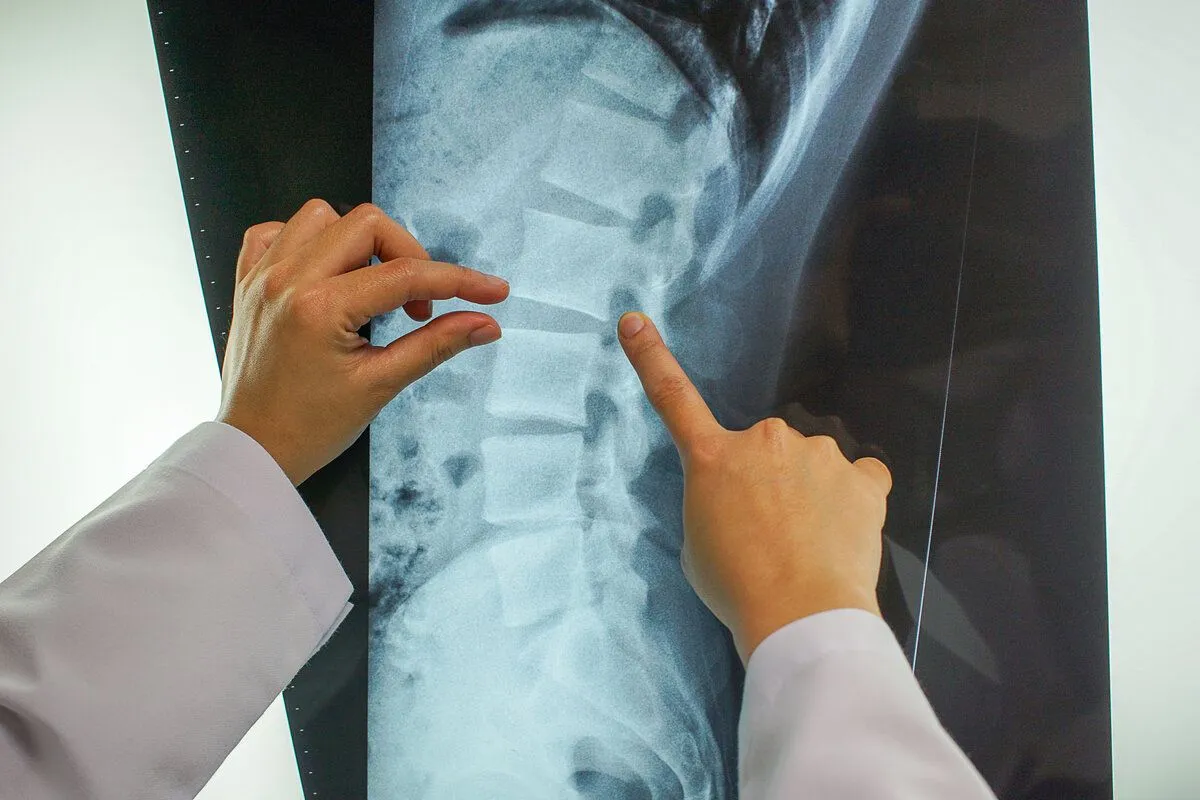

Changes in the shape of bones, as a result of use or degenerative conditions, have fascinated medicine and remained in its focus since its very beginnings. With the development of imaging diagnostics, first X-rays, and later ultrasound, CT, and MRI, we were given the opportunity to see them in full detail and place them in the context of visible indicators of pathological processes, for which they are often the first or objective signs of their existence.
Osteophytes, Spondylophytes, Entensophytes
Description
Today, we view them as important diagnostic indicators, and the entire therapeutic process is guided with these changes in mind, as well as their specific size and location. The problem with this approach lies in the basic premise we follow — that changes in bone shape are pathological and therefore the cause of the patient’s symptoms — a premise that is insufficiently proven and, in some cases, completely arbitrary. Therefore, let us go step by step through the three types of bony protrusions, how they are viewed today, and how they are interpreted by the Tension Model, which sheds different light on their origin, purpose, and role within the functions of the locomotor system.
Osteophytes
Any sharpening or protrusion of a bone can be called an osteophyte. For the purpose of this discussion, we will focus on osteophytes as part of the process of arthrosis or osteoarthritis. In these diseases, they represent sharpened bone formations on the edges of joints and are a clear sign of the arthrotic process and an indirect sign of cartilage wear.
However, if we ask ourselves why the body would respond to cartilage wear by changing the shape of the bone — specifically by creating sharpened edges on the margins of joint surfaces, usually at the locations of ligaments and connective structures responsible for stabilizing the joint — the answer almost presents itself. The body does this in order to further tighten these connective structures, which become looser as the cartilage itself thins, thereby reducing the instability that appears as a consequence of the underlying process. That instability, as explained in detail in the article about knee arthrosis, further damages the cartilage, creating new instability and continuing the cycle.
Additionally, osteophytes form in parts of the joint where they limit the joint’s mobility itself, such as in the ankle, shoulder, elbow, or knee. In this role, they again serve as an additional stabilization mechanism for an unstable joint, but through a different process.
Understanding the formation of degenerative osteophytes through the prism of instability provides us with mechanisms and tools to reduce that instability through interventions in the neuromuscular part of the locomotor system, which is the most plastic and capable of adapting in a way that contributes to joint stability. In this way, symptoms may be reduced and the progression of degenerative diseases such as arthrosis may be slowed.
Spondylophytes
These are sharpenings and protrusions on the spine. They are found on the edges of vertebral bodies, but also within shape changes of the small spinal joints. There too, as in other joints, they represent the body’s response to local instability caused by degenerative changes in the intervertebral discs. These changes are themselves initiated by rotational or axial looseness, which is caused by excessive forces in directions for which part or all of the spine did not evolve.
Such excessive forces may occur when lifting overly heavy loads, through excessive volumes of physical effort over long periods of time, or even through something as simple as prolonged sitting. Physical overstrain appears in many forms, some of which we do not recognize as such.
Understanding spondylophytes as the body’s response to instability and its attempt at additional stabilization gives us a clear therapeutic direction aimed at dynamic stabilization. If carried out professionally, skillfully, and individually, it can lead to dramatic improvements in mobility and pain reduction, even when degenerative changes are extensive.
Enthesophytes
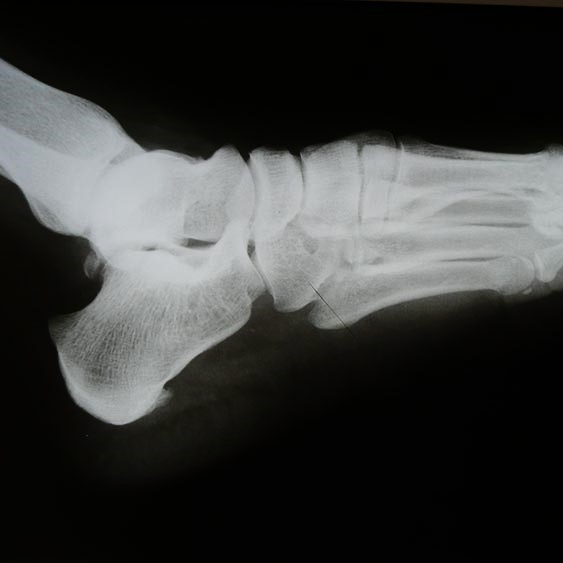
These represent protrusions or sharpenings of bones at the attachment points of tendons or ligaments to the bone. One of the best-known enthesophytes is the heel spur(click to read). They are commonly explained as the bone’s reaction to excessive forces occurring during physical exertion. The problem with this explanation is that they are relatively rare in young athletes, yet common in middle and older age.
In young and active athletes, this bony reaction simply increases the attachment surface area of the tendon to the bone, thereby reducing force per unit of surface area and consequently reducing overall stress.
In patients who are not physically active, enthesophytes represent the body’s adaptation to a lack of physical activity through an increase in system stiffness (reduced mobility), thereby reducing instability that the muscles can no longer compensate for because they are simply inactive. In this way, the body does what its owner consciously or unconsciously demands of it — it becomes less mobile. Problems arise with certain lifestyle habits when we expect such a less mobile body to perform activities for which it is neither accustomed nor trained, resulting in local overstrain accompanied by inflammation and pain, not so much in the enthesophytes themselves, but rather in the surrounding soft tissues.
And finally, to simplify this overly long and possibly overly complicated explanation: a blister on the heel is merely a sign that the shoe is too tight. Yes, the blister directly causes pain, but the tight shoe causes the blister. Understanding this last premise gives us the opportunity to make the shoe more comfortable and thereby reduce pain and prevent future problems. The same principle applies to changes in bone shape. If we are capable of “reading” the meaning of these changes, we are capable of solving the problems caused by them in a far more specific and incomparably effective way.
RELATED CONTENTS

Premium
Plaćeno
When physical stress exceeds the tissue’s ability to heal or adapt, damage occurs, collectively referred to as overuse syndromes. More precisely, this stress is not one-time but cumulative, meaning small damages occur over a certain, usually longer, period.
Premium
Plaćeno
One of my friends, an active athlete and unfortunately, a frequent patient of mine, has often loudly commented on the fact that during therapies, I show no interest in the exact spot where he feels pain, tightness, or another issue for which he sought help.
Premium
Plaćeno
Today, we consider osteophytes to be the body’s normal response to the physical stress to which that compound is exposed.
Their formation increases the surface area over which the force is transferred to the bone, thus reducing the pressure per unit area.